

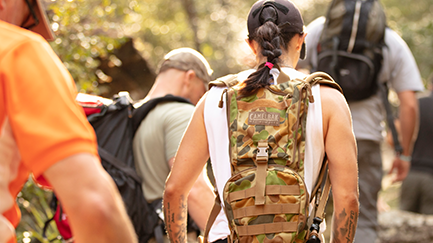
Understanding identity after Defence
Leaving the Defence Force isn’t just a career change – it can sometimes be a shift in identity.

The Mates4Mates physical rehabilitation team is here to help veterans improve mobility, manage pain and enhance their overall wellbeing.
Veterans often experience ongoing impacts from the physical and psychological demands of service.
Years of marching, running and heavy lifting can result in chronic musculoskeletal issues, while operational stress and lifestyle pressures may contribute to cardiovascular and mental health challenges.
Common veteran health challenges
While each veteran and their health is unique, there is a range of injuries and conditions that the Mates4Mates physical rehabilitation team regularly see and help to support with.
What exercises can support these conditions?
Different exercises can help support the body and wellbeing in different ways.
With musculoskeletal injuries, the type of exercise program that may be prescribed to you will vary from injury to injury and person to person.
Commonly though, it will include range of motion and mobility training first alongside some strengthening. As your recovery progresses, the strengthening component increases, and then the focus may shift depending on the injury to stability, endurance, power training or more advanced stretching.
For cardiovascular conditions, moderate aerobic activity (150-300mins) or vigorous aerobic activity (75-150mins) is recommended weekly, with at least two days of muscle strengthening activities, to help improve your overall heart health and other symptoms.
When it comes to exercising to improve your mental health, consistency is key. However, for those impacted by depression and PTSD, strength training is recommended. Acting as a grounding technique, it can help improve mood, energy and sleep which has a positive impact on the mental health condition.
It’s important to note that these are just guidelines and there’s no one-size-fits-all approach to prescribing exercise to support with chronic conditions and injuries. By reaching out to a qualified physiotherapist or exercise physiologist, they will work with you to find out what’s best for your health.
How to get started
To better support your health and wellbeing through the use of exercise, the first step is to speak with your GP or medical specialist about a referral (either through DVA or Medicare) to a qualified exercise professional, so you can then book in for an initial appointment.
Typically, an initial appointment includes collecting a medical history and reviewing your conditions and concerns, goal setting, and then collecting baseline data on where you are at functionally.
From there, a treatment plan will be discussed which may include one-on-one appointments, a gym program, home exercise programs, and other programs such as hydrotherapy.
If you’re unsure how to get started, or looking for more education, simply reach out to the Mates4Mates physical rehabilitation team who are here to guide you through your recovery journey.
Support at Mates4Mates
With rehabilitation gyms located within Veteran & Family Wellbeing Centres, Mates4Mates physiotherapists and exercise physiologists are experienced in supporting veterans and understand the complexities of service‑related injuries and conditions.
As well as one-on-one appointments, the team also provide a range of group fitness classes at select centres including:
Mates4Mates also has appointments available with mental health clinicians including psychologists, counsellors and social workers, either in person at a centre or via telehealth, to help you manage your mental health, wellbeing and improve your quality of life.
To find out more about how Mates4Mates can help support your health and wellbeing, reach out to us on 1300 4 MATES (62 837) for a confidential chat.
Written by Aric Visentin, Mates4Mates Exercise Physiologist